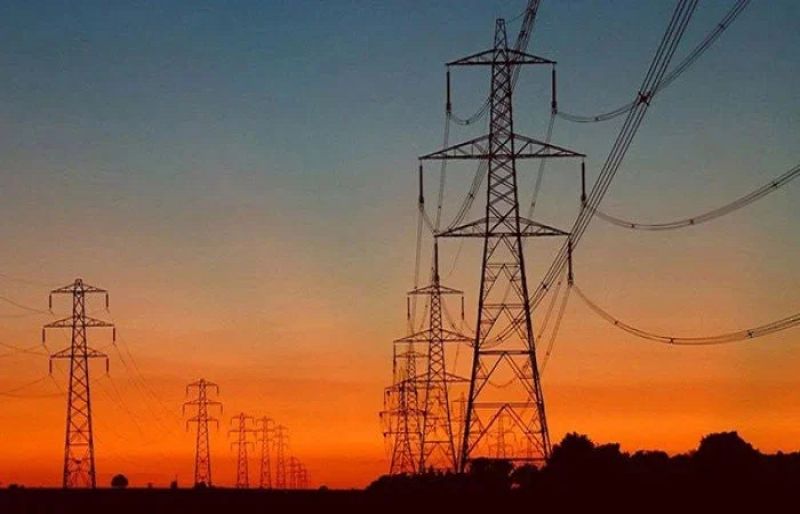
Performance by Discos contributed around Rs397 billion to Pakistan’s circular debt in fiscal year 2024-25, as inefficiencies in power distribution companies and persistent transmission bottlenecks continued to drive heavy losses, according to a report issued by the National Electric Power Regulatory Authority (Nepra).
In its State of the Industry Report 2025, the power regulator warned that inefficiency has become entrenched in the tariff system, with losses routinely passed on to consumers through higher electricity prices.
The report read that revenue recovery also remained during the period, as Discos could collect only about 93.5% of what they billed, leaving a large gap between revenue earned and revenue received.
It added that this shortfall ran into hundreds of billions of rupees and directly fueled circular debt, unpaid bills that ripple across the power chain, from fuel suppliers to power producers.
During the year 2024-25, weak performance by Discos alone added about Rs397bn to this debt, the report said.
The report warned that inefficiency has become “normal” in the tariff system.
Losses caused by poor performance are routinely adjusted into electricity prices, while utilities face little punishment for missing targets.
According to the report, the inefficiencies have removed incentives to improve and allowed mismanagement to continue.
Electricity demand peaked at just over 33,000 megawatts, while installed capacity stood at 41,212 megawatts, leaving large plants idle but still paid for through consumer tariffs.
At the same time, the transmission system cannot carry enough cheap electricity from efficient plants because of congestion and delays, the report read.
It added that public sector power utilities combined transmission and distribution losses reached about 16.4%, far above the allowed limit of 11.77%.
These losses came from theft, outdated networks, and poor maintenance.
Instead of being absorbed by utilities, the cost is passed directly to paying consumers through higher bills.
Transmission failures have also added another layer of cost.
Key transmission lines remain underused due to delays and constraints, even though payments are made as if they are fully operational.
This blocked cheap electricity from reaching consumers and forced the system to rely on costlier options.
According to the State of the Industry Report 2025, rigid power contracts also emerged as a burden.
Under long-term “take-or-pay” agreements, the government must pay power producers even when plants are not used.
Several thermal plants ran at low capacity but still received full payments, pushing tariffs higher.
The government terminated contracts for about 2,829 megawatts of unused capacity, which Nepra estimated could save over Rs900 billion over time.
The Nepra also recorded a rise in complaints, mainly about overbilling, faulty meters, and long power outages.
Frustrated households and businesses are increasingly turning to rooftop solar to escape high costs and unreliable supply.
The report said that Pakistan’s installed generation capacity stood at 41,121MW as of June 30, 2025, down from 45,888MW a year earlier, following the retirement or decommissioning of 2,829MW of inefficient plants.
The reduction was partly offset by the addition of 884MW from the Suki Kinari hydropower project.
Yet capacity reductions failed to resolve the sector’s core problem, underutilisation.
Thermal and nuclear power plants operating under the CPPA-G system recorded an average utilisation factor of just 38.82% during the year.
This low utilisation has kept capacity payments stubbornly high, despite surplus generation capacity.
According to the Nepra’s report, the Capacity Purchase Price (CPP) averaged Rs14.21 per unit, making it the single largest component of electricity tariffs, and accounting for a major share of total generation cost-about 82% of the consumer-end tariff.
The primary driver remains “Take or Pay” contracts, under which power producers are paid regardless of whether electricity is dispatched.
Several independent power producers (IPPs) approached Nepra during the year to reduce their tariffs, a move expected to provide long-term financial relief.
However, the gains from these reductions had been largely neutralised by the “poor performance” of public-sector power plants.
Major facilities such as the 747 MW Guddu Power Plant and the 969MW Neelum Jhelum Hydropower Plant, along with several Wapda-operated hydel stations, continued to operate below potential.
It added that lower availability and inefficiencies translated into higher system costs, preventing tariff reductions from being fully passed on to consumers.
The report said that additional cost pressures came from operational penalties.
Part Load Adjustment Charges (PLAC) amounted to Rs. 46.4 billion during FY2024–25, while Non-Project Missed Volume (NPMV) costs stood at Rs13.3bn.
Though both figures declined from the previous year, they remain largely avoidable through better system planning and demand-side management.
Significant transmission assets remained underutilised during the year, inflating tariffs without delivering commensurate value.